
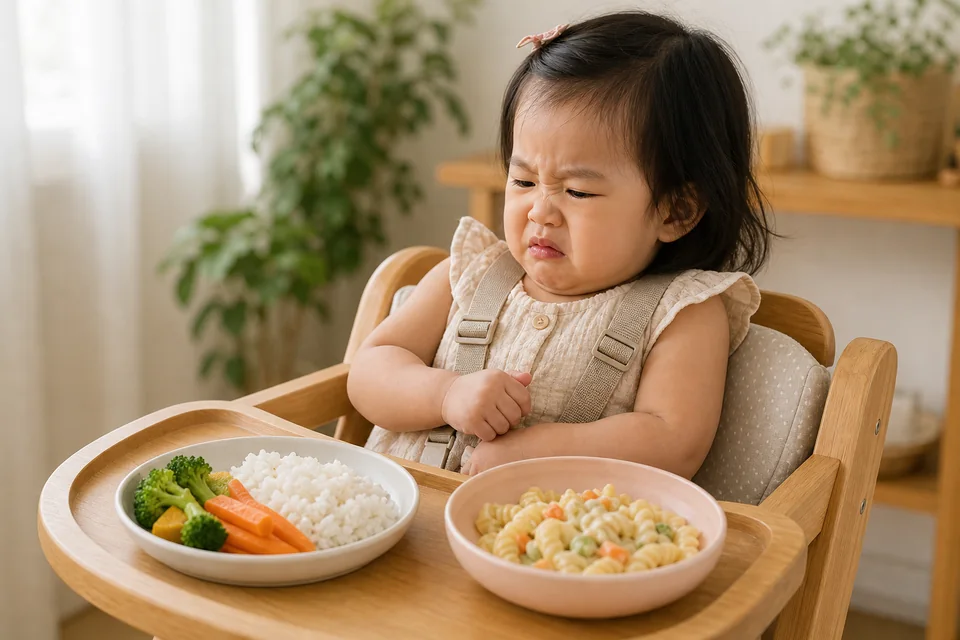
If mealtimes at your table involve turned heads, clamped lips and a lot of negotiating, you are in very good company. Picky eating is one of the worries parents mention to us most often — and one of the more surprising places sensory play can help.
Eating is not just about taste. It is one of the most demanding sensory tasks a small child faces: new textures, smells, temperatures and colours arriving all at once, right inside their mouth. Sensory play lets children rehearse those experiences in the safest place possible — away from the dinner table, with no pressure to swallow anything.
Eating is a whole-body sensory task
Before a child ever tastes a new food, they take in how it looks, how it smells, how it feels in their hand and how it sounds when it squashes. A child who refuses wet, lumpy or slippery foods is often not being fussy about flavour at all — they are overwhelmed by texture.
Children who regularly squish, smear and scoop through play meet those same textures with their hands first, where the stakes are low. Every encounter makes the sensation a little more familiar — and familiar is the first step towards edible.
Touch first, taste later
Feeding specialists often describe a ladder of acceptance: a child tolerates looking at a new food, then being near it, then touching and smelling it — and only then tasting. Most mealtime battles come from asking a child to jump straight to the top rung. Sensory play works the early rungs brilliantly.
A tray of cooked spaghetti to tangle, dry oats to pour or a blob of yoghurt to fingerpaint with lets a child explore food textures with zero expectation of eating. Play with mashed-potato “snow” today, and the mash on next week’s plate looks a little less alarming.
Little hands, capable mealtimes
The same scooping, pinching and pouring that sensory play exercises are the exact movements behind mealtime independence: holding a spoon, loading a fork, lifting a cup without a flood. A child who can confidently manage their own cutlery has one less battle to fight at dinner — and children often eat more willingly when they are the ones in charge of the spoon.
Keep the table pressure-free
Sensory play helps most when mealtimes stay calm. Keep offering previously rejected foods without commentary, let your child serve themselves where possible, and allow food to be touched, sniffed and — yes — sometimes squashed. Every no-pressure encounter is a small deposit in the “familiar” bank.
And if a meal ends with more food on the tray than in the tummy, take heart: exploration is progress too.
Practising textures at Nurture Play
Many of our play invitations are deliberately food-based — rice and beans, oats, cooked pasta, foam — precisely because they let children meet tricky textures in a playful, pressure-free setting. And because the cleanup is ours, your child can explore as messily as they need to.
So if dinner has become a standoff, try moving the encounter somewhere else entirely: a tray, a scoop and full permission to make a marvellous mess.


Ready to play?
Join us for a sensory play session or a workshop — we prepare everything, you bring the curiosity.
Book a session