

What is sensory play?
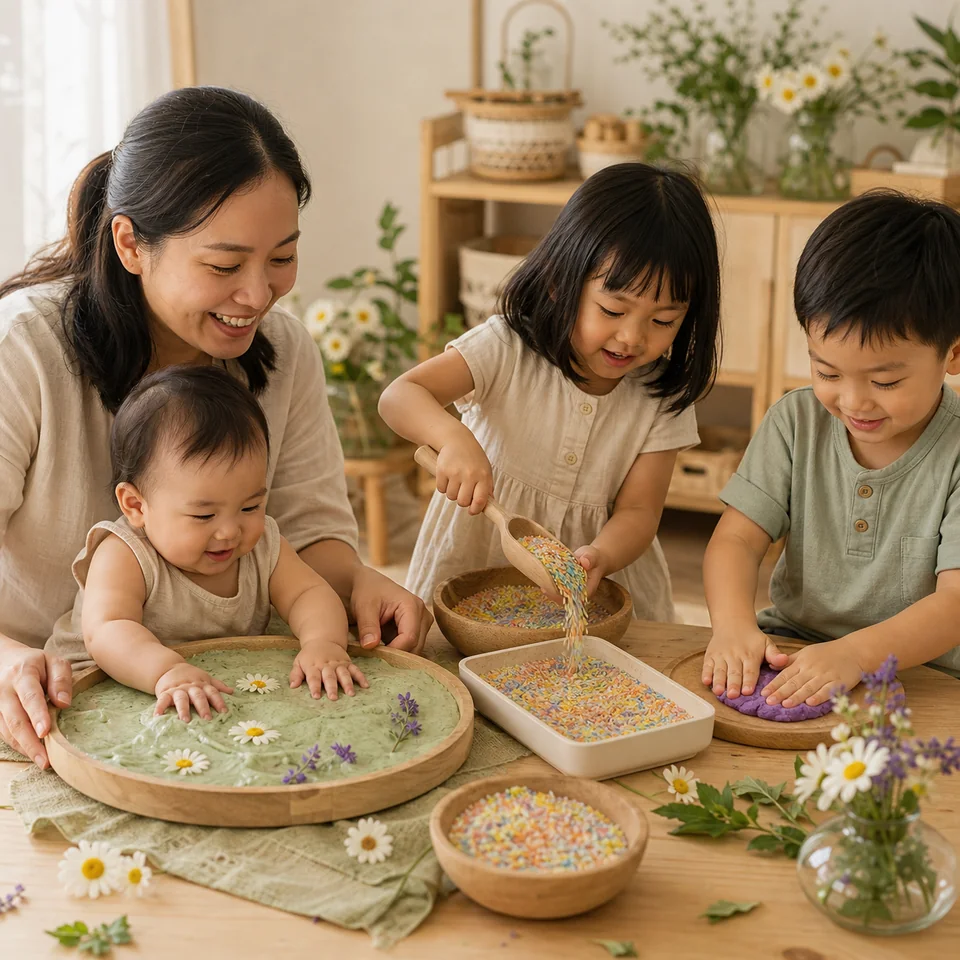
Sensory play is any play that invites children to explore through their senses: touching, squeezing, pouring, watching, listening, smelling and, with age-appropriate materials, tasting. It often looks like a glorious mess. Underneath, a great deal is happening.
- For children 12 years and under
- Half price for infants below 1 year old


Learning through the senses
Young children learn about the world by acting on it. Long before they can ask what something is, they find out by touching, dropping, filling and tipping.
Responsive materials turn play into discovery: rice pours and scatters, foam squishes, water splashes and dough stretches. Each response offers information; each repetition is a small experiment. A scoop can practise coordination, become an instrument or begin an imaginary adventure.
At Nurture Play, we create engaging, open-ended environments for children to explore with their senses and whole bodies. Instead of showing one “correct” way to play, we give them time to investigate, make choices and follow their own ideas.
Because sometimes the most meaningful learning begins with a simple thought:
“What happens if I try this?”


Why sensory play matters
In short
Children learn by doing. Touching, pouring, moving and playing help them build useful skills for everyday life.
Growing bodies
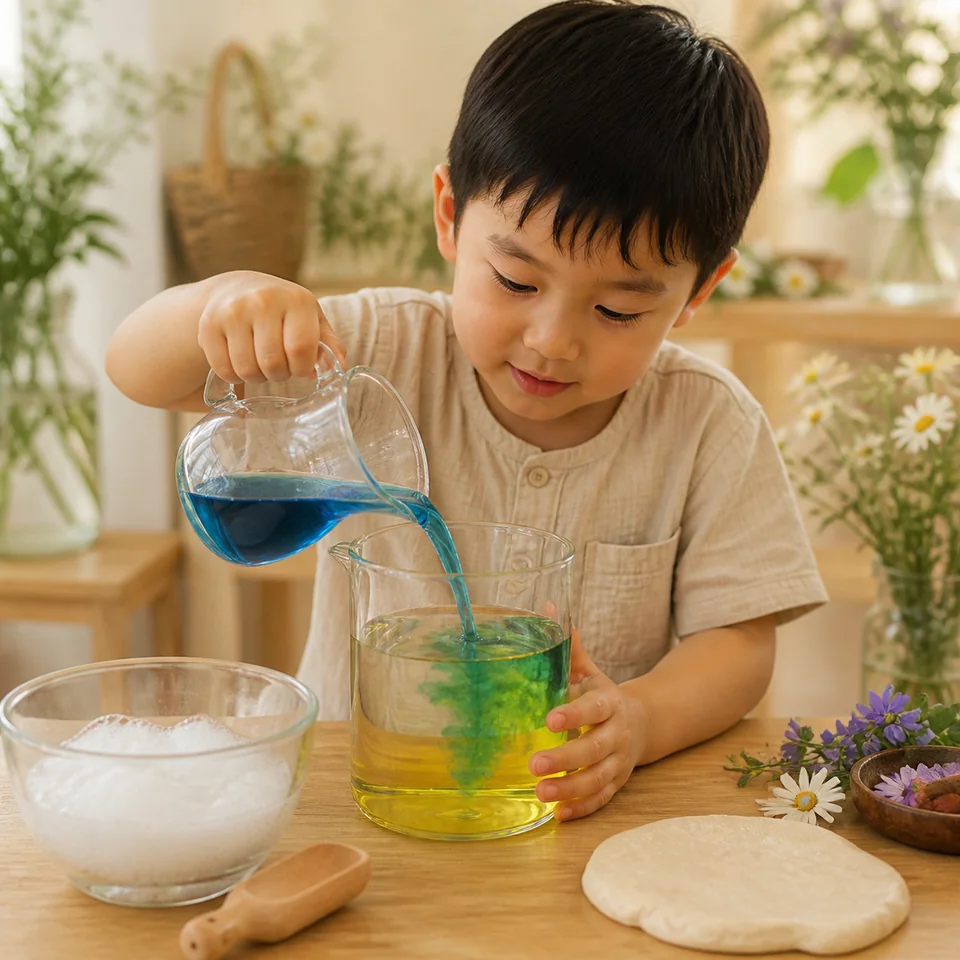
Scooping, squeezing, pouring and moving build stronger hands, balance and coordination.
“I filled it all the way up!”
Curious minds
Children test ideas, see what happens and learn to try again.
“Why did that one sink?”
Growing language
Simple words like sticky, cold and full make sense when children can feel and see them.
“It’s cold and sticky!”
Confidence and independence
Children make their own choices and learn that there is more than one way to play.
“I want to try it my way.”
Emotional and sensory awareness
Children notice what feels good, what feels too much and when they need a break.
“That one feels like too much.”
Connection through play
Playing together builds trust, shared joy and early skills such as taking turns.
“Come and see what I made!”
In more detail
Sensory play invites children to gather information through touch, sight, sound, smell, movement and sometimes taste, when age-appropriate materials are used.
These playful experiences can support many interconnected areas of early development.
Scooping, squeezing, stirring, pinching and pouring help exercise the small muscles in children’s hands and fingers. Crawling through, reaching across and moving around larger play setups can support balance, coordination and whole-body movement.
These are the foundations for many everyday abilities, from feeding and dressing to drawing and writing later on.
For babies, toddlers and growing explorers
Our experiences are created to welcome children across different developmental stages.
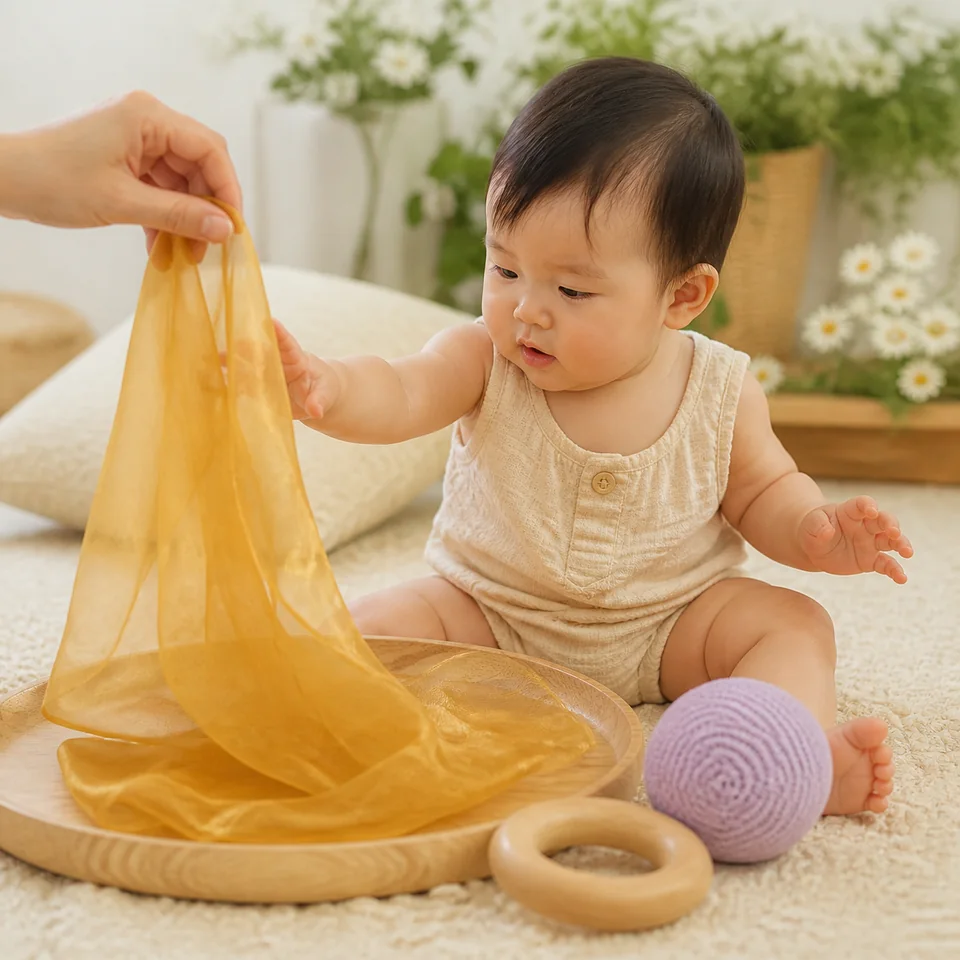
For infants, sensory play may be quiet and simple: watching materials move, reaching towards an object, hearing a new sound or feeling a gentle texture.
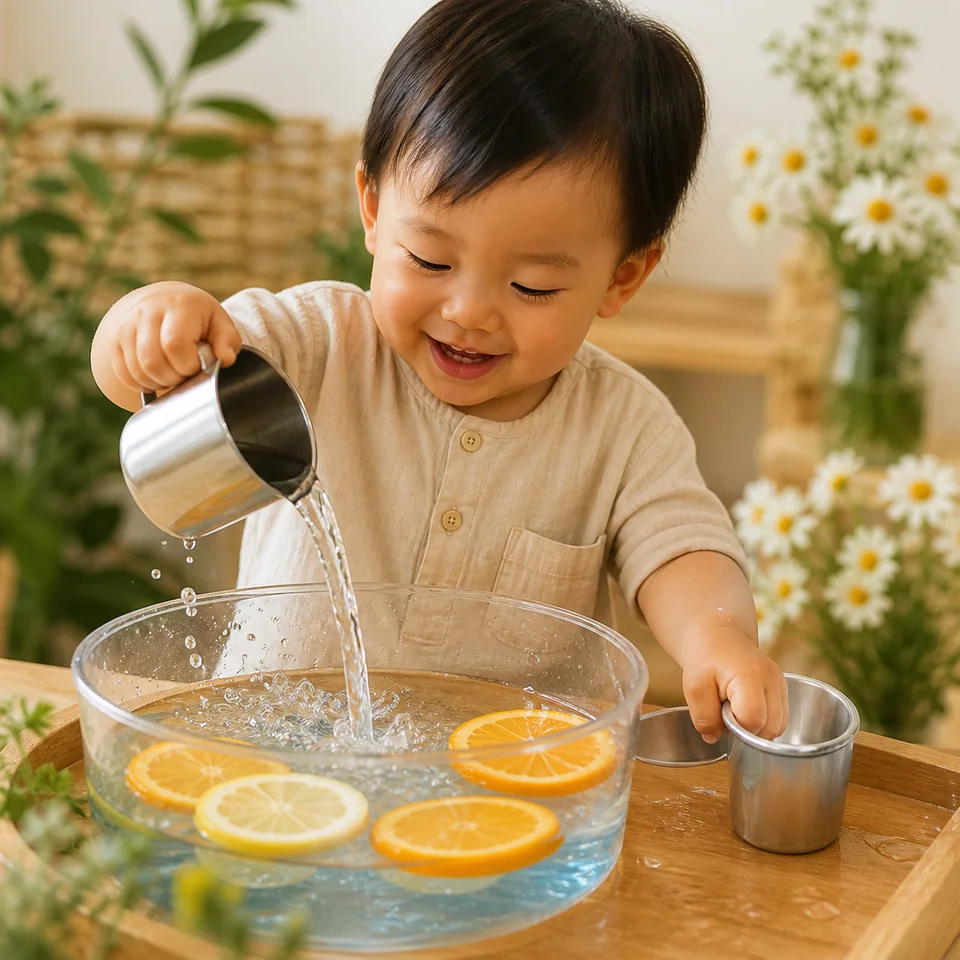
For toddlers, it may involve enthusiastic repetition. Fill, pour, spill and repeat! As they play, they build coordination, confidence and an understanding of cause and effect.
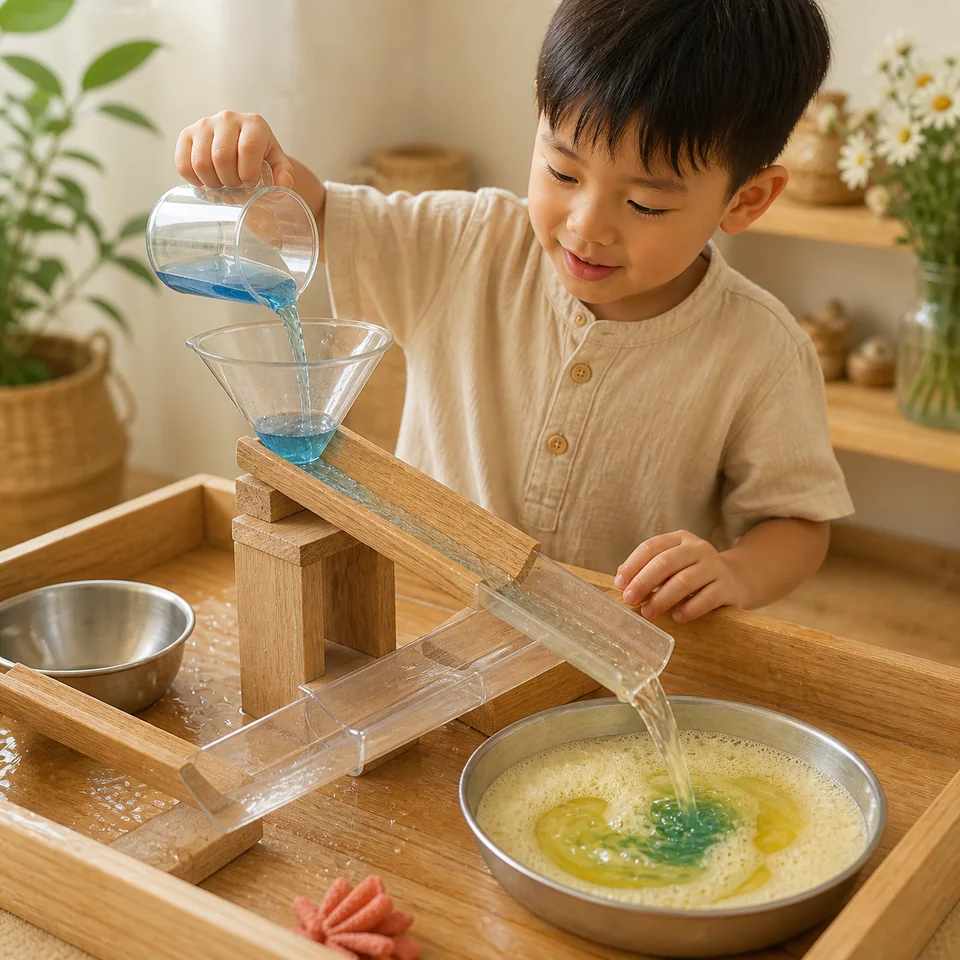
Older children may create stories, invent experiments, combine materials and transform the play setup with their imaginations.
The same environment can inspire very different discoveries. That is the beauty of open-ended play.

Come and make a beautiful mess
A warm, welcoming and child-led play experience where curiosity is encouraged and every little discovery matters.
Come for the scooping, splashing and squishing.
Stay for the confidence, connection and wonder growing underneath it all.